
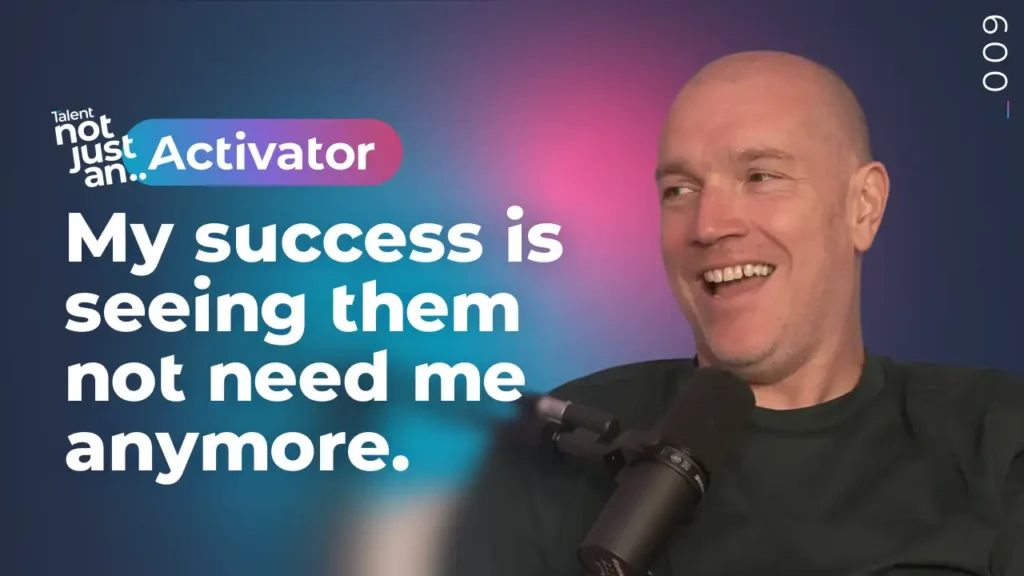
Episode 9 – Not Just an Activator with Dom Price
Episode 9 – Not Just an Activator with Dom Price
Episode transcript
Note: This transcript has been edited for clarity and readability while staying true to the spirit of the conversation.
Amanda: This is Not Just A…, the podcast where we get to know the person behind the job title. I’m your host, Amanda, and today I’m joined by Dom Price. Dom is a leadership expert, keynote speaker, and someone who spends a lot of time helping organisations rethink how they work and how people show up within them. But today, we’re talking about who Dom is beyond the job title. Let’s get into it.
Amanda: Dom Price, welcome to the podcast.
Dom: Thank you so much for having me. I’m really excited to be here.
Amanda: I’m excited too. And I feel like we should start by saying we’ve known each other for a little while.
Dom: Yeah, there’s definitely some history here.
Amanda: Which means I’m either going to go very easy on you, or very hard.
Dom: I’m prepared for both.
Amanda: This podcast is about the person behind the job title. So before we get into what you do now, I want to go back a bit. What were you like growing up? What kind of kid were you?
Dom: I was a very curious kid. I asked a lot of questions. Probably too many questions. I was the kind of kid who always wanted to understand why things worked the way they did. That showed up at school, sometimes to my teachers’ frustration.
Amanda: Were you good at school?
Dom: I was… fine. I was good at the things I was interested in, and not great at the things I wasn’t. Which, looking back, is probably most people.
Amanda: That tracks.
Dom: I wasn’t disruptive, but I was definitely challenging. If something didn’t make sense to me, I’d ask why we were doing it that way. And sometimes the answer was, “Because that’s how it’s always been done.” Which, even then, didn’t sit well with me.
Amanda: Do you think that curiosity is what led you into the work you do now?
Dom: Absolutely. My entire career has been driven by curiosity. I’m fascinated by how people work, how teams work, and why organisations make the choices they do. And more importantly, why those choices often don’t line up with what people actually need.
Amanda: When did you realise that was your thing?
Dom: Probably in my early career, when I started noticing the gap between what leaders said they wanted and how systems were actually designed. There was this constant tension between intention and reality. People would say, “We trust our teams,” but then put layers of approval and control in place. And I couldn’t stop asking, “If you trust them, why does the system say otherwise?”
Amanda: That’s such a good way to put it.
Dom: It’s something I still see all the time. Most organisations don’t have a people problem. They have a system problem. And we ask people to behave differently without changing the environment they’re operating in.
Amanda: So we tell people to collaborate more, innovate more, speak up more…
Dom: …and then punish them when they do.
Amanda: Exactly.
Dom: We reward compliance and then wonder why no one takes risks.
Amanda: Before all of that, though, what was your first job?
Dom: My first proper job was in retail.
Amanda: Same.
Dom: It’s such a good training ground. You learn very quickly how to deal with people, expectations, and pressure. You also learn how arbitrary rules can be.
Amanda: Oh yes.
Dom: Someone decided once, somewhere, that this is how things should be done — and now everyone follows it without question. Which again, even then, I found fascinating.
Amanda: You’ve worked all over the world. Was that always part of the plan?
Dom: Not at all. I didn’t have a grand career roadmap. I’ve mostly followed opportunities that felt interesting or uncomfortable. If something made me a little nervous, I usually took it as a sign that I should lean in.
Amanda: That’s brave.
Dom: Or foolish. Time will tell.
Amanda: One of the things you talk about a lot is the future of work. But I’m curious — how do you define “work” for yourself?
Dom: For me, work is about contribution. It’s about whether the thing I’m doing is useful to someone else. Titles matter far less to me than impact.
Amanda: That feels very aligned with this podcast.
Dom: Exactly. If you strip away the job title, what’s left? What value are you actually adding?
Amanda: When people hear “leadership expert,” they often assume confidence has always come easily. Is that true for you?
Dom: Not at all. I still get imposter syndrome. I still walk into rooms and think, “Do I really belong here?” But I’ve learned that most people feel that way. The difference is whether we let it stop us.
Amanda: That’s reassuring to hear.
Dom: I think it should be talked about more. Confidence isn’t the absence of doubt. It’s the willingness to act despite it.
Amanda: You talk a lot about leadership, but you’re very clear that leadership and management aren’t the same thing.
Dom: They’re not. Management is about control. Leadership is about influence. Management asks, “Are you doing the thing?” Leadership asks, “Are we doing the right thing?” And a lot of organisations confuse the two.
Amanda: Why do you think that happens?
Dom: Because management feels safer. Control gives the illusion of certainty. If I can measure it, approve it, and sign it off, I feel like I’m reducing risk. But what you’re actually doing is slowing everything down and eroding trust.
Amanda: And trust is the thing everyone says they want.
Dom: Exactly. Every leadership offsite starts with, “We trust our people.” And then you look at the system and think, “No you don’t.” If you trusted them, you wouldn’t need five layers of approval to buy a pen.
Amanda: Or take a day off.
Dom: Or make a decision that’s well within their role. We say we want autonomy, but we design environments that punish it.
Amanda: You mentioned psychological safety earlier. It’s a phrase that gets thrown around a lot. What does it actually mean to you?
Dom: Psychological safety is about whether it’s safe to speak up. Can I ask a question without being embarrassed? Can I challenge an idea without being punished? Can I admit I don’t know something? If the answer to those is no, then you don’t have psychological safety — no matter what your values poster says.
Amanda: And without it, nothing else really works.
Dom: Exactly. You can’t have innovation without safety. You can’t have learning without safety. You can’t have accountability without safety. People shut down. They do the minimum. They protect themselves. And then leaders say, “Why is no one engaged?”
Amanda: That must be frustrating to see over and over again.
Dom: It is, but it’s also understandable. Most leaders were promoted because they were good at their job — not because they were good at leading people. And then we don’t train them. We just say, “Congrats, now you’re responsible for humans.”
Amanda: With zero instruction manual.
Dom: Exactly. We’d never do that with a system or a process, but we do it with people all the time.
Amanda: How do you personally measure success now?
Dom: Impact. If someone walks away thinking differently, acting differently, or feeling more confident to try something — that’s success to me. I don’t need everyone to agree with me. I just want people to question the default.
Amanda: That questioning seems to be a theme.
Dom: It always has been. The question “why” is incredibly powerful. But it’s also dangerous in rigid systems. Because once people start asking why, they start seeing cracks.
Amanda: Has that ever gotten you into trouble?
Dom: Many times.
Amanda: Good.
Dom: I’ve definitely been labelled “difficult” before. But I think “difficult” is often code for “won’t just accept the status quo.” And I’m okay with that.
Amanda: You spend a lot of time talking to senior leaders. What’s one thing you wish more of them understood?
Dom: That their behaviour sets the tone — not their words. You can say you care about wellbeing, but if you’re emailing people at midnight, the message is clear. You can say mistakes are okay, but if you punish the first one, people will remember that. Culture is built in moments, not statements.
Amanda: That’s such a good line.
Dom: It’s also the uncomfortable part. Because it means leaders have to look at themselves, not just their teams.
Amanda: How do you protect your own energy, doing this work?
Dom: I’ve learned to be very intentional about boundaries. Early in my career, I said yes to everything. Now I’m more selective. If I’m exhausted or burnt out, I’m not useful to anyone.
Amanda: That’s a lesson a lot of people learn the hard way.
Dom: Absolutely. We glorify busyness. But being busy isn’t the same as being effective.
Amanda: If you weren’t doing this work, what do you think you’d be doing?
Dom: Honestly? Probably still asking annoying questions somewhere else.
Amanda: That tracks.
Dom: I think curiosity always finds an outlet. If it wasn’t work, it’d be community, or teaching, or writing. I don’t think I’d ever be satisfied just following instructions.
Amanda: You’ve talked a lot about systems, leadership, and culture. I’m curious — how has failure shaped you?
Dom: Failure has been one of my biggest teachers. I’ve failed plenty of times. Projects that didn’t land. Ideas that didn’t work. Moments where I thought I had the right answer and absolutely didn’t. But I don’t see failure as a negative thing anymore.
Amanda: That’s a learned mindset.
Dom: Completely. Early on, failure felt personal. Like it was a reflection of my capability or worth. Now I see it as data. Something didn’t work. Why? What can I learn from that? If you remove the ego from it, failure becomes incredibly useful.
Amanda: That’s easier said than done.
Dom: Of course. No one enjoys getting something wrong. But the organisations that grow are the ones that make it safe to experiment and safe to fail. If every mistake is punished, people stop trying.
Amanda: If you could go back and give your younger self some advice, what would it be?
Dom: Slow down. I was always in a rush. To progress, to achieve, to prove myself. I thought momentum came from constant movement. What I’ve learned is that reflection is just as important as action. You don’t need to have everything figured out. You just need to keep learning.
Amanda: That’s reassuring.
Dom: I think a lot of pressure we feel is self-imposed. We assume there’s a timeline we’re meant to be following. But most of those timelines are imaginary.
Amanda: This podcast is about the person behind the job title. So if we take your title away — leadership expert, keynote speaker — who are you?
Dom: I’m someone who’s deeply curious. I care about fairness. I care about people being able to show up as themselves at work without fear. And I care about leaving things better than I found them.
Amanda: That’s a pretty solid definition.
Dom: It’s taken me a while to get there. For a long time, my identity was tied to what I did. If work was going well, I felt good. If it wasn’t, I felt like I was failing as a person. Untangling that has been important.
Amanda: How do you do that — separate who you are from what you do?
Dom: By remembering that work is something I do, not who I am. It’s important, and I care deeply about it. But it’s not the only place I get meaning. Relationships, health, curiosity, contribution outside of paid work — those things matter too.
Amanda: Especially in a world that constantly asks, “So what do you do?”
Dom: Exactly. We lead with job titles as a shortcut to understanding someone. But it’s such a narrow slice of who they are.
Amanda: What do you hope people take away from your work?
Dom: I hope people feel permission. Permission to question. Permission to try something different. Permission to say, “This isn’t working for me.” If I can create a moment where someone feels less alone in that — that’s enough.
Amanda: That’s a powerful goal.
Dom: I think work can be better than it is. Not perfect — but better. And that starts with how we treat each other.
Amanda: Before we wrap up, is there anything you wish more people would stop doing at work?
Dom: Stop pretending certainty is the goal. We don’t need leaders who have all the answers. We need leaders who ask better questions. Certainty shuts down conversation. Curiosity opens it up.
Amanda: That feels like a perfect place to end.
Dom: I’ll take that.
Amanda: Dom, thank you so much for joining us.
Dom: Thank you for having me. This was great.
Enjoyed this episode?
Explore more conversations with inspiring leaders and innovators on our podcast or subscribe to our YouTube channel for the latest episodes.
We know that talented people know talented people. If you’d like to talk to us about how we can support your business, get in touch.