
Episode 17 – Not Just a Radio Host with Emma Chow
Episode 17 – Not Just a Radio Host with Emma Chow
Episode transcript
Note: This transcript has been edited for clarity and readability while staying true to the spirit of the conversation.
Amanda: This is Not Just A… a podcast where we get to know the person behind the job title. I’m your host, Amanda, and today we’ll be speaking with Emma Chow, a breakfast radio announcer who’s been in the game for over fifteen years. She’s interviewed some of the biggest artists on the planet, and I worked with her whilst in the music industry. We get in-depth on navigating impostor syndrome, people pleasing as a young woman entering the workforce, and becoming a working parent. It’s time to go behind the scenes. Or in Emma’s case, when the radio microphone is switched off, and chat about who she really is behind the job title. Let’s get into it.
Amanda: Emma Chow, welcome to the podcast.
Emma: Thank you so much for having me.
Amanda: This is such a full circle moment because we worked together way back. I feel like I’ve known you for ten years.
Emma: One hundred years?
Amanda: Yes. When I was in the music industry and I was bringing in artists for you to interview, and now the shoe is on the other foot and I’m interviewing you.
Emma: I know, I’m a bit nervous. I normally ask the questions, and now I’m in the hot seat.
Amanda: Well, we’ve got a few questions to get through. Let’s start with who you were and what you were doing before you became a radio announcer and what was driving you then?
Emma: I wouldn’t say that anything in particular was driving me at that point, to be honest. I knew that I wanted to be in the music industry or the entertainment industry, but I thought I would end up working at a record label similar to what you were doing. I thought I’ll do artist relations or something. Prior to working in radio, I was working at the Music Network, which is a trade mag. I was interviewing the content directors and music directors, and Charlie Fox was the person I was interviewing at the time. He was like, “You’re really bubbly. Have you ever thought about getting into radio?” And I literally went, “Lol. Hilarious. No.” And he’s like, “No, seriously, I’ve got a couple of people who are going on leave if you’d like to give it a crack.” And I said, “Did you hear me? I’ve never even entertained the idea of that kind of job.” He’s like, “You’ll be fine.”
So I went into work at the Edge, the Edge 96.1, which sadly doesn’t exist anymore.
Amanda: My number one station.
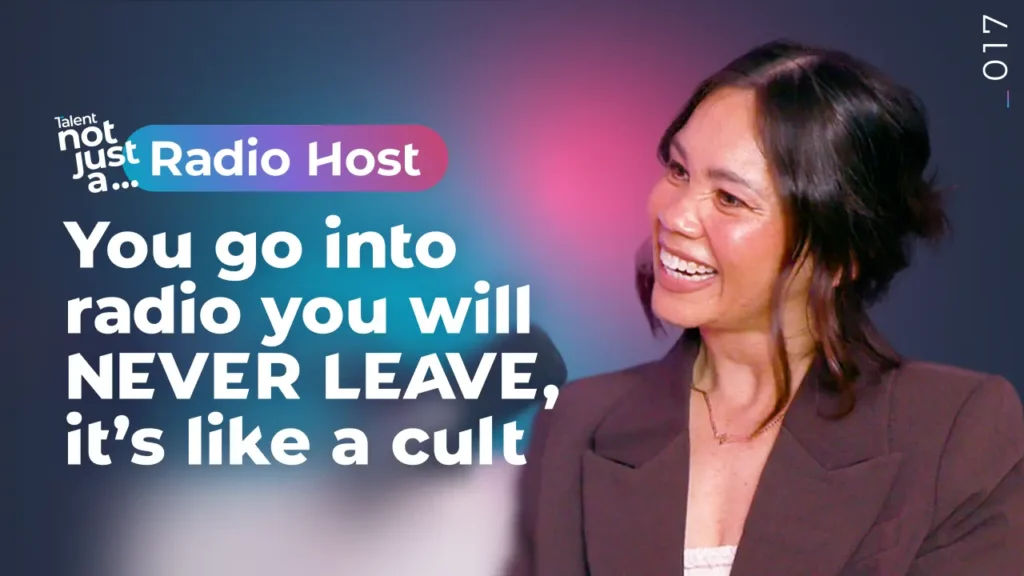
Emma: I know, and I owe so much of my career success to that little station that could. So I went in and fell in love with radio. They didn’t have a job for me at the time, so I went back to the Music Network for another year. And then I knew at that point I was like, I have to do this. There’s something so addictive. And people in radio had warned me, “Careful. You go into radio, you will never leave. It’s like a cult.” And here I am, almost fifteen years later.
Amanda: Who was one of your favourite artists that you interviewed, or what’s a memorable moment?
Emma: I always love interviewing Jason Derulo because that man is up for anything. This is a little bit behind the scenes now, and you would have had to send these emails out sometimes: “Please keep it music related.” But we want to know about the juicy stuff that we’re reading on Perez and TMZ. He was just the kind of guy that did not care. You could ask whatever you wanted. He’d always give you a straight, hilarious, very honest answer. So he’s definitely up there. He also did my gender reveal of my second baby.
Amanda: I feel like I remember seeing this on Instagram.
Emma: Yes, so this was when we were on R&B Fridays radio. He came in, he was promoting a new song and we had a balloon ready, and we’re like, “I don’t know what the gender is going to be. Can you pop it for us?” And he popped it and it was announced that it was a boy. Yeah, it was really fun.
Amanda: So fun. I have this vivid memory of when we had the DJ Khaled release and we brought in that big cardboard cutout of DJ Khaled, and you could put your face where DJ Khaled was to pretend that you were him. And another memory when Old Town Road by Lil Nas X came out, we brought in that little horse.
Emma: Oh my God, was that like a Shetland pony? The cute one with the little fur around his feet.
Amanda: Oh my gosh, so many memes, but lots of fun in radio.
Emma: Yes, so much fun.
Amanda: So, tell me who you are when nobody’s watching you. What’s the version of yourself that exists completely outside of work?
Emma: We could take the light road, or we could take the deeper road. But I can do both if you would like.
Amanda: I would love both.
Emma: Okay, so when I’m not on air, I’m a mum of two boys. Valentino is seven and a half and Raphael is almost two. While I’m not doing my full-time paid job, I’m doing my other full-time job that never stops. That’s the 24/7 round the clock job. So always spending a lot of time with my kids and my husband. I love getting out in the sun and doing bush walks. And I’m a bit of a nerd. I like pottery sometimes.
But I think on a deeper level, I am just as insecure and second guessing myself as every other woman. You know, when you have conversations with your girlfriends, you haven’t caught up in a couple of months, and there’s all of this stuff that you need to download. I feel like the common theme is, whether you are a working mum, a mum, whatever it is that’s happening in your life, you never feel like you’re nailing everything. You always feel like there’s something. You try so hard and you doubt yourself at every step when you shouldn’t. Like I know in my head, I feel like I’m doing a really great job most of the time. But then there’s a devil on my shoulder that sits there and is like, “Oh, but try harder and prove yourself not just to everyone else, but to myself.” And I think having babies and having very minimal time off work, I had nine weeks with Tino, I had six weeks with Rafa, it was a very quick turnaround. I feel like there’s always something that I’m trying to prove. And I get impostor syndrome.
Amanda: I feel you, because literally every single month, I’m like, am I doing a good job? Do I need to be doing more? It’s just this thing I feel that women have on their shoulders.
Emma: Yeah. Like, am I enough?
Amanda: And you’re in the spotlight as well. So I feel like there’s that added pressure of the court of public opinion in a way. Do you feel that there’s a lot of pressure on that side of things as well?
Emma: Yeah, it is definitely turning up and turning on. Even though I am who I am off air and on air, at the end of the day, I’m performing when I’m on the show with Jimmy. For three hours we are ‘on’. You don’t really, traditionally, have time to stop down and acknowledge these kinds of conversations. But I feel like the show that we have created together is fostering the mental health angle or the motherhood angle, just showing the other side. In traditional radio, it’s really a lot of smoke and mirrors. Up until recently, I think podcasting has had a lot to do with that. Everyone’s very frank. We’re all genuine. We’re all honest.
So that was a long-winded answer to your question of who I am. I think that a lot of people would think that in the job that I do, I’m very confident and I’m outgoing. And yes, I am those things, but I’m also like every other woman just trying to show up and be the best mum and friend and co-host and wife and sister that you possibly can be.
Amanda: I think that makes you human and also not a narcissist or a psychopath.
Emma: And there’s a lot of those out there.
Amanda: There’s a lot of those out there. I feel like there’s so many people where I go, I feel like you need to second guess yourself here, but they are so confident. I feel it just makes us a bit more authentic that we have these thoughts.
Emma: But I also think that it’s really important. I said this on the show not long ago, if you came to me and being like, “This is my life and oh my God, I’m so confused and I don’t know how to feel,” I would be talking to you with so much love and so much grace, “You got this, and everything’s going to be fine, and I’m here for you.” But we can’t speak to ourselves like that.
Amanda: Yes.
Emma: We need to really try to harness the best friend in us and talk to ourselves the way that we would speak to our friends.
Amanda: Agreed. I remember chatting to somebody recently and they were like, you need to reimagine your self-concept. And I actually hadn’t heard that word before. Self-concept. And she said to me, “You’ve got this and it’s okay. If something doesn’t go right, you’ll fall on your feet again. It’s all okay.”
Emma: Yes, and you learn from it. And it sounds as hell to talk to yourself and pump yourself up. But again, you would do that for your friends. “You got this, babe. Come on. You’re going to smash it. You’re a boss.” Tell yourself that. Even journalling, I’ve started journalling. I’m back in therapy. We just do this real simple thing at the end of every day. It sounds lame, but it really does bring you back to Earth. It grounds you. No matter what kind of day you’ve had, there’s the three things that you’re grateful for. And the most important thing I think is the three things that you’re proud of yourself for.
Amanda: Yes.
Emma: Because you forget to pat yourself on the back when you’ve had a day that you got through it, and this is how you handled it. These are the things that you learned. And moving forward, you’re going to change your reaction or whatever it might be the next time.
Amanda: I want to touch on the therapy thing a little bit more. I think we live in a world now where therapy is way more accepted and encouraged than what it was, perhaps, when our parents were growing up.
Emma: Oh, God. Our parents will never go to therapy.
Amanda: But I think there’s still perhaps a long way to go for us as a society. I was chatting with somebody who said, I think that it’s always encouraged to go to the gym and work on your health and fitness, but actually working on your mind, still, so many people perhaps shy away from it and go, “I don’t need to do that. I might just go for a run or do Pilates.” And those things are great. But I really would love to hear about why you decided to go back to therapy and your thoughts on that.
Emma: My therapist Monica, shout out, love Monica. She was like, it’s great that I’m quite small and I’m a little bit aggressive. I’m a bit like a Chihuahua.
Amanda: I love it.
Emma: Very feisty. So when I work out, I like to do the CrossFit type workouts. I love to do boxing, and I like to just sweat in an infrared sauna. But she said, while that is important, you do need to work on your mind. And we’re concentrating at the moment on transitions. So for me, the reason why I’m back in therapy is because a lot of big things happened in my life in the last six months, and it’s all kind of just catching up to me. Breakfast radio, mind blown. Still again, impostor syndrome. I know that I’m great at what I do, but I still can’t believe that I’m here. And then my husband’s not well at the moment. My parents moved interstate, so we now don’t have any familial help. So there’s a financial difference there, having nannies care for our kids. And then it’s just the balance of being a mum who’s working, trying to take care of two kids and a husband.
So a lot of things were happening. What we’re working on is the journalling and then also transitioning, because there’s a lot of things that happen during the day that you kind of don’t stop to shake it off. And my therapist was telling me, “I know it sounds weird, but when you get down to the car at the end of a workday, you’re up, up, up, and everything’s really heightened. It’s almost like your shoulders are like you’re constantly on. Everyone’s expecting things of you. When you get back to the car, literally shake your body. Take a few deep breaths, sit in your car, meditate, even if it’s for two minutes.” I’ve just started doing a little bit of breathwork as I’m driving out of the car park.
Amanda: It’s like physically releasing it.
Emma: Yes. And then I think as well this is really job specific. But radio has made me a really impatient person because every second counts. And if you lose that second, it’s gone. Even when you’re really proud of a break that you do on air, it’s gone.
Amanda: You can’t tangibly hold it, it’s gone into the universe and that’s it.
Emma: Yes. And the people that heard it, heard it. And those that didn’t, didn’t.
Amanda: Yep and then you’ve got a minute of ads and then it’s back on and you’ve got to keep going.
Emma: Exactly. So I woke up at 3:50am this morning. The point was that you’re up, up, up. Because I am really reliant heavily on time at work, I can’t let go of that feeling when I get home, when I’m with my kids. So I can be a bit like, “We need to do this and we need to do that.” And if we don’t finish all the homework and dinner and bedtime rituals, we’re not going to have time to spend together, quality time. I’m really big on spending quality time with my kids. At the end of the night, she’s like, “You need to be more fluid. Have those enjoyable moments in five-minute increments. You’re not going to be able to save it until the end of the day.”
Amanda: It’s great advice.
Emma: Yeah. So, it’s journalling, it’s transitions, and it’s trying to be more fluid and just relax a little bit. I don’t know if you can tell, you’ve known me for a long time, I can be a bit stressy, can be prone to anxiety. So just trying to let it go and just enjoy. Because quality time is the most important thing to me. But I’m kind of stopping myself from having it because I’m so militant on time.
Amanda: I understand. That’s great advice. Thank you for sharing.
Emma: Hopefully it’s not too specific.
Amanda: No, it’s great. Very honest and real and authentic. And that’s what we want. So, what’s something you’re deeply passionate about that would surprise people who only know you professionally?
Emma: This actually happened. I shocked a room full of people. We were having a bit of a PR meeting at work, and they’re like, “What would you like to do that you haven’t done yet?” And I said that I would love to be an animated character. I’ve always dreamed of being in a Bluey or, don’t even get me started on K-pop Demon Hunters.
Amanda: Oh my gosh.
Emma: I can’t. Everyone at work is like, “Emma, why are you so obsessed?” I’m like, “Do you know the song?” This is the biggest. Our household watches that movie every single day. Without fail. We listen to the soundtrack every single day. And my husband Enzo is an EDM fan. And even he loves Golden. He’s listening to it, getting ready for work in the morning.
Amanda: They’ve had millions and millions of streams on this.
Emma: It’s a phenomenon.
Amanda: This needs to be a sidebar because we could do an entire podcast on the facts that I know about the failed K-pop singer, who now has a number one on the Billboard charts with Golden. Anyway, yes. So animated.
Emma: Part two that no one asked for. But, yeah, I would love to do an animated character. I feel like that would be really fun. Like some kind of sassy teenage or cool mum, young mum character.
Amanda: I love that.
Emma: Yeah. Everyone was like, “What? That is so random, so left field.”
Amanda: And is it something that you’re passionate about?
Emma: Yeah. I don’t play a character when I’m on air. Obviously, it’s a heightened version of myself. It’s still me, but it’s heightened. It’s ‘on’. But I think it’s fun to jump into another character’s mind and do crazy things with my voice.
Amanda: Did this come about after you had kids when you were watching shows?
Emma: This was actually prior to having kids. I think I remember watching Happy Feet. So that was a long time ago. And it was like, was Nicole Kidman a voice in it? And Hugh Jackman maybe, Robbie Williams? I don’t know. I feel like at least one of them was in Happy Feet. And I remember watching it being like, “That’s cool. I want to try that.” But Bluey really, after having kids, Bluey really kicked it into gear because I was like, “This is a cartoon I can get around that has funny jokes that go over the kids’ heads, but the parents really get it.”
Amanda: Yes.
Emma: And it’s quintessentially Aussie. I love that.
Amanda: Isn’t it funny when you rewatch old shows that you watched when you were a kid, old Disney shows, and then those jokes or things that they said go over your head and you watch it now and you’re like, “Oh, that was saucy. That was funny. That was for mum and dad so they could enjoy watching the same movie over and over again.”
Emma: Yes. Have you seen Inside Out?
Amanda: Oh, my God, how good is that? I love that core memory has made its way into everyday vernacular. It’s like all those little glowy yellow balls, those core memories. I cried so much watching that.
Emma: I kind of think about it daily in my routine where I’m like, “Oh, there’s my little sadness or anger or anxiety.” There’s impostor syndrome. Maybe number three will be about impostor syndrome.
Amanda: So maybe you’ve already answered this question, but if you could be known for something completely different than what you’re known for now, what would it be?
Emma: Obviously some kind of voice actor. But I also love writing, I’m a big feeler, and I love journalling, that kind of thing. At one point, I wanted to write a book about motherhood, but I don’t know what take it might be.
Amanda: Yes.
Emma: I feel like I have a lot to give in terms of what I’ve learned in my life, but I wouldn’t want it to be a guide because there’s no one size fits all. Maybe some kind of crowdsourced thing. But I don’t know exactly what, but I would love to have something tangible. Like we were saying before with radio, there’s nothing tangible. Like I would love that. When you have kids, you start thinking about what’s my legacy? What do I want? Really? For me, I want my kids to be proud of who their mum was.
Amanda: Yes.
Emma: Whether professionally or as a mum. I don’t know, I have a lot to work on. The impatience, the timing, all that. But I think it would be nice to have something, maybe that I write to my kids, even that I put in a book that’s just for them that they can have when I’m not here anymore. Maybe this is the stuff that mum really wanted us to know about ourselves, about life. I’m not entirely sure yet, but maybe a writer of some description.
Amanda: Okay. Yeah, I like that. Stay tuned everyone.
Emma: Stay tuned. There might be something coming. Maybe. Who knows?
Amanda: So, Emma, now that we know more about who you really are, what’s a lesson you’ve learned outside of work that actually made you better at your job?
Emma: I think it comes down to kids. I remember the first time I got pregnant, I was so nervous to tell everybody. I was nervous to tell my co-host at the time. I wasn’t nervous to tell my boss. I was nervous about what it would mean for my career. And I remember the great Charlie Fox, said to me, “This is a really great thing for your career.” And I remember thinking at the time, “How is me having a baby going to be great for my breakfast radio career? I don’t know, what have I done?”
And Amanda Keller, who I absolutely adore, and who has a beautiful relationship and family and career and has managed to, quote unquote, have it all, even though we know that you can look like you have it all on paper, but there’s many balls in the air, I remember her coming over to me saying, “I know it doesn’t seem like it now, but this is the best job that you could have to have a baby and it will make you a better broadcaster.”
And I think I understand now. It has softened me. Prior to having kids, I thought I was pretty perfect. You’re like, “I’m in a really great space. I’m a really good role model. I’ll be the perfect mum.” You think you’re pretty awesome when you get into your thirties. And really, we have really come into ourselves.
Amanda: For sure.
Emma: But then kids come into the picture and they hold up a mirror to you and they’re like, “But this is who you really are.”
Amanda: They humble you.
Emma: But I think I was quite a judgy young woman, and I made my mind up about a lot of things in life. Even getting callers on the show, I’d be quite judgy listening back to some of our old shows, I’m like, “Oh, Emma, you really shouldn’t have said that.” It’s very un-PC and not nice. But it has softened me in the sense that I am way more empathetic. I give people more chances. I don’t judge them by one stupid decision they made. And I’m just more open minded. And I think that’s because I want people to treat my kids like that. Then I naturally am softer, more forgiving. I let the little stuff go. I don’t bother dying on a hill over something that doesn’t really matter.
But things that I’m really, in the other direction, things that I’m really quite strong on, like drawing boundaries and saying no is something that I’m trying to practice as well, which comes into therapy too. A lot of, again women, I’m really stereotyping us here but I’m a woman and the women that I know, we find it very hard to say no.
Amanda: We find it hard not pleasing everyone and letting people down.
Emma: So I think that has made me softer, but it’s also made me stronger in the sense that I will protect myself, my friends, my family. But I will say that a lot of my friends have pushed back on things now in their thirties and been like, “Oh my God, I’m so shocked and surprised that people were like, ‘Okay, that’s fine.'” It’s so fine. We just build it up in our minds where we’re like, “Oh my God, what are they going to think of me? I’m not going to get the next job. They’re not going to renew my contract.” But if you just ask, you’ll find that people are a lot more understanding than you think they are.
Amanda: Yeah. And all you have to do is ask and just be a little bit firm. You don’t have to be a bitch about it.
Emma: No. No one wants to be.
Amanda: Oh my gosh. If I could go back to my twenty-year-old self and tell her this, I feel like there would be a lot of heartache saved.
Emma: Yes. A lot less anxiety.
Amanda: Less anxiety, less money on therapy.
Emma: Yeah. But I guess we learn lessons, right? We can take that and say, well, we learned things, and we grow. And now it makes us into the women that we are.
Amanda: So how do these other sides of yourself show up in your work as a radio announcer, even if people don’t realise it?
Emma: This is a hard one. I think I’m the one that doesn’t realise it. I am constantly trying so hard at everything that I don’t realise that I’m doing enough. It’s like the reverse. And they’re like, “No, but we see everything that you do. We see how hard you work on the show. We see how hard you work on building friendships. We see how hard you work being an amazing mum.”
I got told by our EP the other day, she’s like, “I have worked with so much talent.” And she said, “I have never in my life met someone who’s harder on themselves than you are.” And that made me cry in that moment. And still, I think about that comment every day and I thank her in my mind all the time. I say it every day. And I said, “Thank you for reminding me of that.” Because I think I know that’s a weird answer, but I feel like it is the reverse. I feel like everyone else sees it, but I don’t. So, it’s bringing all sides of myself to the show and then really fully being myself.
I will say there was a version of radio that I did, knowing you for most of our friendship, that was quite combative and really divisive. And while there’s a place for that kind of radio, we were targeting an audience that was young, slightly younger than I was at the time. So I was worried, and there were a lot of expectations. And things said in my ear like, “Don’t talk too much about getting married, Emma, because not everyone’s getting married in our audience.” “You’re pregnant. Don’t talk too much about that.” “You’ve got kids now.” But that ends up being this whole conversation has now been about working parenthood.
Amanda: Yes.
Emma: And I sometimes feel guilty for that, but it really is that’s who I am. And it’s so much a part of my life. So, I think with the show that I was on, I had to stifle and hide a lot of myself. Whereas with Jimmy and Nath’s show, it’s very inclusive. The whole entire team from execs to our on-ground producers every day to us three in the studio, we are all so supportive of each other and having every facet of our lives be on air.
Even when that means we’re having really tough, sometimes heavier conversations. You’ll tune in most days and we’re having a laugh. There are in-jokes and the boys are teasing me, which I love. I love the playful teasing because it means I’m one of the boys. But then there’s times where Jimmy’s talking about mental health or he’s talking about his wife who has cystic fibrosis, or I’m talking about parenthood and the reality of what it feels like to have a kid and come back to work and have people take you seriously. I had people in my old network, executives, that said behind my back, “She won’t come back.” So, I feel like we’re doing a different kind of radio.
Amanda: Well, you mentioned about being really hard on yourself, but I also think that that’s being very self-aware. I feel like I can be quite hard on myself. And as much as I think it’s kind of a balance, it’s a good trait and then also a bad trait at the same time. But I think you just want to do a really great job. But you’re very self-aware of, was this good, do I need to be better. So, I feel like it’s sort of a balance of it is, I think it can be hard on yourself in a way. But then you also need to journal and go, I’m proud of myself for X, Y and Z.
Emma: Yes. And you need to be able to let it go. Because I have a perfectionism complex.
Amanda: Same.
Emma: So, I don’t know if you’ve experienced this in your current role or maybe in a previous role, but for example, the other day I did a break on air, and it didn’t come off the way that I wanted it to. No one else would have known. The listeners wouldn’t have known, my co-host would not have known, the team wouldn’t have known. But I beat myself up about that break that I thought was shit for 48 hours. And I went home and I journalled, and I wrote two entire pages about it. I was like, “I can’t let it go, and I know it doesn’t matter, and I know no one noticed. But why do I care? Why can’t I just let it go?” If it was my friend, I’d say, “Babe, don’t worry about it. It sounded great.” But have you ever had a moment where you’ve beat yourself up about something and everyone else thought you were great?
Amanda: All the time. I think I look back, and I go mainly working with journalists and pitching artists when I was in the music industry and then now moving into recruitment and tech pitching our senior leaders. Going back to the music industry, when you pitch an artist in, you’d perhaps get thirty or forty pieces of coverage. The more coverage, the better. And I think I remember moving into this new role, completely different industry. And I think I got maybe ten pieces of coverage for something that we had just released. And I remember I was like, “I have failed. This is terrible.”
Emma: Because you were comparing.
Amanda: I was comparing apples and oranges. And I was like, “I just want to do a really great job, and I want to smash it out of the park. And the more press, the better.” And I remember my manager said, “Oh my God, Mandy, ten pieces of coverage is massive, and we’ve never had that before. And you need to just sit back and reflect and go, it’s okay.” But I was so hard on myself.
Emma: And how long did it take for you to let it go?
Amanda: Oh my God. Probably a good couple of weeks. Yeah, a little bit. I’m still a little bit. I know.
Emma: But it’s true. And then your current employer is like, “You’ve smashed it.” You’ve smashed anyone else. So, whether it’s ten or fifty, you’ve still done an amazing job.
Amanda: Yeah, but it’s that person in the back of your head.
Emma: I don’t like that person.
Amanda: No, it needs to go.
Emma: Just piss off. Please go away. I don’t need you. I just need to realise how great I am. And you need to realise how great you are.
Amanda: We are great.
Emma: All women are amazing.
Amanda: Yes. I think as well something that you touched on, you know how you were told you shouldn’t talk about getting married and you shouldn’t talk about your pregnancy. I think that’s so hard to hide your most authentic self. And I think in the workplace, it’s just so tricky because it’s almost like you can’t then be the best version of yourself.
Emma: Exactly.
Amanda: You’ve always got something in the back of your mind. And it’s just really hard.
Emma: It almost made me a little bit ashamed of where I was in my life, even though I was so happy. I married my best friend, and I have these two beautiful, healthy kids. And one hundred percent, I was apologising five minutes ago for talking about parenthood again. But it’s such a huge part. And I need to, we also need to stop apologising.
Amanda: I agree.
Emma: Why are we saying sorry so much? That stupid girl in our heads again, I said piss off.
Amanda: Inside Out. What character is it?
Emma: Yes. Well, we need to stop apologising, but we’ll get there. Sometimes you need to apologise because you’ve done the wrong thing, but if something happens and it’s not your fault, why do we feel like we have to apologise?
Amanda: Yeah, I agree.
Emma: Just don’t. Be like, “What can we do next time?”
Amanda: True. And I think that there’s wonderful leaders out there in the world now, and managers and bosses who really want to make sure that they are building authentic workplaces, which is good to see. And I think that that conversation definitely still needs to keep happening because we’re not there yet.
Emma: No, but baby steps getting there.
Amanda: So, can you share a story from your work that perfectly captures how being fully yourself, not just the professional version, has made you successful?
Emma: I think for me, a measure of success with radio particularly, it’s a live communication medium. I think the measure of success is how you connect with the people who are listening. And the only way that you can connect is by being yourself. Actually, Jimmy, Nath and I were having this conversation in the studio off air the other day. There used to be a way of doing radio, and now there’s this way that we want to do radio that connects because people can smell fake one hundred percent. They can smell fake on radio and TV. Social media has completely changed it. It changed the game, podcasting as well, like we were discussing earlier.
I think being successful in my job and the way that I’ve gotten to where I am is I’ve always been myself and never apologised for that. Never tried to be a character or tried to copy anybody else. Because I know that the way that I communicate is connecting with people. And if I show the bare bones of who I am, when work is hard, when relationships are hard, when parenting is hard, when I’m riddled with anxiety, if I’m bringing that stuff forward and people are like, “Oh my God, she’s just like everyone else. The boys are just like everyone else.” We’re all humans going through really similar experiences, granted at different moments of our lives. But that’s how you’re successful in radio. It’s connecting. And in podcasting, one hundred percent doing what you do. You have to connect with people. You have to be your most authentic self or it’s not going to cut through and people won’t care. They’ll start listening to someone else who they feel more connected to or more similar to.
Amanda: Definitely. And I think brands are discovering that as well. Obviously through TikTok, it’s not about those polished brand videos anymore. It’s about the co-founder or the marketing chick that’s sharing behind the scenes. “This is a day in the life of our photographer or our creative director.” And I think it’s making it more relatable for people.
Emma: Or even just being silly. Like TBH Skincare that did that thing, they went viral and then she got panned online and she was like, “You know what? Now I’m working with Mini Cooper.” She’s got a whole campaign with them based off the fact that people were giving her shit online. And she was like, “I’m just going to embrace this.”
Amanda: Yes. Agreed. And I think as well, perhaps there’s been an earlier shift for B2C brands, but I think there’s still a long way to go for B2B brands in that space. But the reality is, at the end of the day, even if it’s B2B, there’s still somebody at the other end that you’re marketing to, that you’re connecting with.
Emma: Make them feel something, 100%. Make them feel something. If you’re not making people feel, in marketing especially, like brand awareness campaigns, if you don’t connect to the audience, they’re not going to want to buy your product. They’re not going to want to be like the people who are in your campaigns. You have to strike a chord.
Amanda: Yes. And I feel like that shift happened as well in the modelling world where people didn’t want to see the super, super thin model anymore. They wanted to see the real everyday female.
Emma: Everyday bodies and body hair and scars and cellulite and all that stuff. And again, it makes you feel included. Like it makes you feel like, “I see me.”
Amanda: I see me. And being your most authentic self in the workplace brings out the better.
Emma: Agreed.
Amanda: Okay. This is an interesting one. What would people be most surprised to learn about what your job really involves day to day?
Emma: We have so many boring meetings. What you hear on air is the most fun part of our job. It’s that synergy, the connection, the going off on tangents and funnies and all of that. The live element of radio. That’s the fun part. Everything else is pretty boring. Look, I’m not going to lie. A couple of weeks ago on a Thursday, we interviewed Alex Moran. So fun. There’s definitely fun. You get to go to concerts and stuff. But really, there’s so much prep. It is live radio, but there’s so much prep. There are so many cooks in the kitchen. There are lots of opinions. It’s like, what should we do? And ideas need to be fleshed out. Campaigns need to be fleshed out. There are whole departments that are working towards the product that we put out on air. Ultimately, it falls on our shoulders. But there’s meetings pre-show, there’s meetings after the show, there’s pre-records after the show, there’s interviews that you go to during the week, and then you work at home, and then you do meetings on a Sunday at 4:00pm to prep for Monday’s show. So, there’s a lot of boring behind the scenes stuff. But yeah, what you hear on air or what you hear on the podcast is that’s the fun stuff.
Amanda: Yeah. I feel like that’s similar to the music industry, working for a record label. There’s so many behind the scenes things, and I remember so many people saying to me, “Oh my God, your job is so much fun.” And yes, it is so much fun being in that world. But then there’s the other side where you’re prepping for an artist arrival into Australia, there’s schedules, there’s KPIs.
Emma: Yes, KPIs. You were saying trying to get as much press as possible, trying to get as many interviews as possible.
Amanda: There’s the digital world, there’s sales, there’s everything that goes on. There are legal teams that are doing everything. It’s not just the fun side.
Emma: It’s business.
Amanda: It’s business.
Emma: We’re still trying to sell ads to clients because otherwise there won’t be a show.
Amanda: Exactly.
Emma: So, there is all of that “boring stuff”. Some people really get off on sales and accounts. Everyone needs to do something.
Amanda: I mean, I don’t really love an Excel spreadsheet, but some people do really love that. Have you seen those Excel spreadsheet champion competitions that they do over in America?
Emma: No.
Amanda: It is wild.
Emma: What do they have to do? Do they have to do like equals some open bracket A6 to B6?
Amanda: Yes. I think it’s something crazy like that. Obviously way more in depth. I don’t even know what the sums would be. But yeah, they have a full-on competition and then a winner is crowned and they are the Excel champion.
Emma: That is wild to me. That is really similar to the chicks in some Scandinavian country that do the horsey sticks. And they ride around, they giddy up on the horses. What are they called?
Amanda: I don’t know what they call it, but they do the jumping as well.
Emma: Yes. It’s like equestrian, but they’re people with horsey sticks. Or like ironing in a tree comps. That’s odd.
Amanda: There’s a competition for everything these days.
Emma: You know that there’s people that are setting up dating spreadsheets now, right? Google docs.
Amanda: What does that mean?
Emma: They’re like doing a little black book. They’re doing it in a Google doc or a Google spreadsheet. They rate them out of ten and how good the conversation was and what they dressed like.
Amanda: I have seen this. Yes. I mean, I feel like it’s kind of not a bad idea.
Emma: I don’t know. There’s too much choice. I’d much prefer to meet someone in person. I would suck if I had to navigate, you and I are both married, if I had to navigate dating these days, I just don’t even know if my flirt game is on. You know what I’m saying?
Amanda: I don’t think my flirt game is on.
Emma: And managing three conversations at once. I’ve got friends that have screenshotted their phone and it’s talking to John, James and Andrew. And I’m like, “How are you remembering what you’ve said to every person? How do you even remember their names? Where are you going on the weekend? What did you wear on that date? What did you talk about?”
Amanda: I don’t think I’d be able to do it.
Emma: It’s so stressful. The girl in your head is giving you grief.
Amanda: The girl needs to go. Well, this is funny.
Emma: We’ve really covered it.
Amanda: We’ve really covered it all.
Emma: To Google Docs dating. I didn’t think I was going to do B2B.
Amanda: Well, there we go. Therapy chat.
Emma: I know.
Amanda: Well, I’ve got one last question for you. You’ve got a lot of talents, but I wanted to ask, what’s your hidden talent that nobody knows?
Emma: I don’t think I have a hidden talent. But I can pick things up with my toes. Is that a hidden talent?
Amanda: I mean, it could be. Is it like a party trick that you would do?
Emma: I mean, it could be. I have never been at a party where everyone’s like, “What’s your party trick?” But I also don’t think that anybody said, “This is my party trick.”
Amanda: Nor have I.
Emma: I think if there’s someone that can do something fun or cool, they’ll just do it at every party. Like Jimmy, love Jimmy. He does a really, really great Trump impression. Like so much so that people will take turns being like, “Okay, say something to me.” And he’ll be all over the socials and stuff. He’s actually very good at it. But yeah, I can pick things up with my toes. I know that’s not a very interesting answer.
Amanda: I mean, it’s cool.
Emma: Because I have, thank God I have a manicure pedicure, but I’ve got long toes. I got finger toes. See? I feel like that’s the first foot you’ve seen on camera.
Amanda: That’s going to be the teaser of this whole podcast. I bet you haven’t seen that before, guys.
Emma: Emma Chow’s foot. I haven’t ruled out OnlyFans feet. No one would know it’s me. I can make so much money.
Amanda: I have thought about this as well.
Emma: This is business. That’s business.
Amanda: What are those websites called? It’s like foot fetish wiki.
Emma: Oh, there’s WikiFeet where people rate your feet. I think that’s celebrity feet. I don’t, I’m so low on that level. But no, you just do OnlyFans, but for foot fetishes.
Amanda: Yeah. No AI taking over with the whole OnlyFans stuff now because have you seen, I don’t know if you saw, but there was an AI influencer at Wimbledon.
Emma: Oh my gosh, she was gorgeous, gorgeous. And all the guys I knew were like, “This girl’s so hot.” She’s fake, bro. She’s fake.
Amanda: She’s fake. But so many people fell for it. And I swear, I think a few celebrities also fell for it.
Emma: Really?
Amanda: Yes.
Emma: Imagine they slid into her DMs. The fake AI. Damn, bit awkward.
Amanda: I mean, somebody obviously managing that, right? “I’ll come back to you in 24 hours. Thank you for your request.”
Emma: Yeah. How random.
Amanda: Yeah, well, Emma Chow, thank you for joining us.
Emma: Thank you so much for having me.
Amanda: So lovely catching up.
Emma: Oh, it’s been such a pleasure. Thank you so much for having me.
Enjoyed this episode?
Explore more conversations with inspiring leaders and innovators on our podcast or subscribe to our YouTube channel for the latest episodes.
We know that talented people know talented people. If you’d like to talk to us about how we can support your business, get in touch.