
Episode 14 – Not Just a CEO with Victor Piñeiro
Episode 14 – Not Just a CEO with Victor Piñeiro
Episode transcript
Note: This transcript has been edited for clarity and readability while staying true to the spirit of the conversation.
Amanda: This is Not Just A…, the podcast where we get to know the person behind the job title. I’m your host, Amanda, and today we’re speaking to Victor Piñeiro, who is a CEO.
We chat about growing up in Argentina, migrating to Australia, and his love for ocean swimming. But above all, we speak about who he really is behind the job title. Let’s get into it.
Amanda: Victor, welcome to the podcast.
Victor: Thanks very much.
Amanda: It’s so wonderful to have you. I feel that we’re very lucky at Talent because you’re also speaking at one of our upcoming events for our wonderful clients.
Your story is incredible, and we had to share it not just with clients — we had to share it on the podcast. You’ve been a CEO, you’ve worked in corporate, you’ve been an incredible leader. But you’re not just that. Your story is incredible.
You also do these amazingly hard ocean swims.
Victor: My hobby, yes.
Amanda: And it’s your hobby, but we have to talk about it because you’ve got a documentary crew following you around and you’ve just completed one of the hardest ocean swims in the world. I believe you were the first person to successfully complete it.
So, can you tell the audience about who you are outside of work?
Victor: Outside of work, I’m a passionate Argentinian who lives in Australia. I’ve been living here for 20 years. I’m a chartered accountant by background, but that doesn’t quite define me. I don’t see myself as the typical boring accountant.
My wife is from Argentina. I’ve got two daughters — teenagers — and they keep me busy.
Outside of who I am, I would like to think that above all, I’m a regular person with an extraordinary hobby.
The day I left Argentina and migrated to Australia, my mum said to me, “I don’t care what you become. You can do whatever you want. Just be sure you’re a good person.” And that really stuck with me.
I think I’m yet to leave a place without somebody crying that I leave. I think I’m a person that has an ability to connect with people. That is my superpower.
Amanda: Absolutely. Talk to us about your hobby being ocean swims.
Victor: I came to Australia in 2005. I used to be a rugby player, a competitive rugby player back in Argentina. I played rugby here for a couple of years.
I went to the ocean just like a normal guy. Tried to surf. Maybe five years after I came, I was working at KPMG and somebody said to me, “We’re going to go for a swim. Would you like to come?”
They took me to Manly — Manly to Shelly, like the world’s most beautiful, iconic swim. I went there in boardshorts, no goggles. I didn’t know that you had to wear goggles. Where I come from, in the ocean, you just jump in. And I had never swum.
They gave me flippers. Somebody went to the car and got goggles. They were scared that I was going to drown.
So I did 400 metres, and then they went, “Actually, you don’t swim that badly. Let’s take one flipper off.”
That’s how I started going every weekend and getting into swimming. Initially, I did the ocean races on the weekend. The first one I did was near Palm Beach, and I almost drowned. It was two kilometres. It was 200 people. I think I finished 195.
I was like, Jesus, I’ve got to do something to get better at this.
I started doing stroke correction. I went to a squad that trains at the Boy Charlton saltwater pool. A lot of them were doing long-distance swimming, and I was like, if these guys can do it, surely I can do it too. They’re not superhumans.
That’s how I got into it. I went from two kilometres to doing five, ten kilometres.
Then one day I was swimming Bondi to Coogee with some friends, as you do on the weekend, and one of the guys said, “We’re going to Gibraltar next week, and one of the guys pulled out.”
I went, “If I’ve got a free ticket, I’ll go and do it.”
Then I swam Spain to Morocco. I loved it. I loved the whole journey. That got me hooked, and I started doing more and more.
Amanda: Wow. Taking it back, what made you want to move to Australia from Argentina?
Victor: I grew up in an Argentina that is very different today. I was born in 1977. In the 80s, Argentina was horrible. We had hyperinflation. The president changed. We had military groups. It was really bad.
But the 90s were good. We had convertibility one-to-one. The economy was good. You would travel. I went to South Africa on rugby tours. It was a really enjoyable time to live in Argentina.
Then in 2001, as I was going through my accounting degree, there was a massive crisis. I remember it was extremely difficult to get a job.
I went for a job at ExxonMobil. There were 3000 people. I made it to the last five. The feedback on the last interview was, “Your English is not good enough.”
I was like, you’ve got to be kidding me. I went to a bilingual school. My English is fairly decent. And I went, no, this country is not going to work.
So I made the decision to move out. Conscious decision.
I went to the Canadian Embassy to do a visa for Quebec, and on the wall there was a sticker with one of those things that you can pull out. It said, “Have you thought about Australia?” It was from Southern Cross, a migration visa agent.
I went home, researched it, and I went, Quebec, Sydney… the weather there, rugby… must be a better fit for me.
So I did the visa. I was an accountant, I could speak English properly, I was young, so I got a skilled visa and came to Australia.
Amanda: Did you know a single person in Australia?
Victor: No. It took me nine days to get a job at KPMG. I was so impressed. I couldn’t believe it.
I met a guy the day I was leaving Argentina. Somebody said, “Look, they’re looking for accountants in the paper.” I sent an email, and he said, “I need to meet you before you get to Australia.”
I said, “Look, I’m leaving at 4pm.” This was at 10 in the morning.
He said, “Where are you?” It was like if I was in Surry Hills and he was in Manly. He said, “Okay, let’s meet in the middle.”
We met in the middle in a coffee shop. Took a napkin, did an interview in the coffee shop, wrote a number. I came to Australia, called that number, did five interviews, and a week later I was working at KPMG.
Amanda: It’s like it was meant to be.
Victor: My wife always says I was very lucky. I keep saying to her that sometimes you need a bit of luck in life, but you also have to force the situation to be in that position.
Amanda: I agree. You make your own luck in a way.
Why rugby? Argentina is obviously very well known for football, as in soccer. Did Argentina win the last World Cup?
Victor: Yes, we did. We’ve got Messi.
I do play football. I played football here a little bit when I finished playing rugby.
I like football because in Argentina, if you don’t follow football, on Mondays you go to school and you don’t know what to speak about because everyone talks about football.
When I was young, I used to be a goalkeeper and I was decent. My dad took me to one of the top five teams in Argentina and I went for a trial. They said, “We’re happy to consider him, but he has to leave school.”
My mum said, “No, he’s not leaving school.”
In retrospect, I think that was really good because I stopped growing at 15, so I probably would have been too short. But the decision was made there that I wasn’t going to play football. I wasn’t going to leave school. My parents would not allow it.
I went to bilingual school. It was a good school and my parents wanted me to finish there.
I started playing rugby when I was young. I was already quite decent. From 15 to 18, I was a top scorer in the team. I could see myself making really good friends. It took me a while to get in, but then the social side of rugby was incredible. I loved it.
All I could think about was becoming a professional rugby player.
But when I was 18, I started having problems with my calves. I’ve got something called compartment syndrome. Basically, your muscle grows too much so it doesn’t fit the cavity. I was getting cramps. I had three or four surgeries. Could never fix it.
That’s also one of the reasons why I swim, because when I swim, it doesn’t bother me. But if I go for a one-day run, I end up all cramped.
I can play squash, I can play tennis, football to a certain extent. I’m like Messi — I walk a little bit and then run when I need to.
Coming back to your question, I think rugby was a really good way of developing who I am today. When I manage teams today, what I did in rugby reflects a lot. I was a captain of many teams that I played for, and I think that leadership was born there. It carries today.
Amanda: Absolutely. Who are you when nobody’s watching?
Victor: I like to rest when nobody’s watching. I do a lot. A lot of the training is next level for some of the things that I do.
I try to be present at home. I’m a father. I’m an Uberman for the family when nobody’s watching. Having two teenage girls in Sydney, you know — hockey here, then water polo there, then tutoring, then school. I find that if I charged by the hour on the Uber, I’d probably make more money than I do in my job.
I’m passionate about family.
When you ask people who they are, they tell you, “I’m an accountant,” or “I’m a lawyer.” But in reality, the most important thing you can do in your life is your family. I think that’s what we’re here to do, from my point of view.
To me, that’s probably my biggest accomplishment, even though it hasn’t been easy.
Amanda: And how does migration fit into that? Did you have your girls when you moved to Australia?
Victor: No. My wife is from Argentina. We met there when I was 18 and she was 19. We got married in 2004 to come to Australia, so we could do the visa together.
We came together. My wife didn’t want to be in Australia at the beginning. She was very reluctant. She missed the family a lot. I would say it took her well over ten years to get settled.
In the meantime, we had the kids. It was hard. We had no family. A lot of people here have the same issue, but maybe one person is in Perth and the other is in the Central Coast. We had them in Argentina, so that was hard.
But eventually we settled.
Then I was working for a company and we were doing really well, expanding globally. I thought, I’m travelling so much, it might be better if I move to Singapore. Less travel.
I was going Monday to New York, Wednesday to London, Friday to Beijing, then came back. One week here, next week do it again. I was like, I need to move somewhere closer to the middle of the world.
So we moved to Singapore for a year. We did the second migration.
It didn’t work out as we expected. The company had some issues. Actually, I was selling so much that they couldn’t cope with the growth. I was asked to stop selling.
Amanda: Oh my gosh, I’ve never heard of that before.
Victor: I went, no, I can’t do that. I’d just finished swimming the English Channel. I came back from college, I spent a month in Europe, and I went, look, I can’t take another three months off. I need to work.
So I came back to Australia. It took me two weeks. I got three job offers and ended up going to Thomson Reuters. They offered me a role in a company called Confirmation, within Thomson Reuters, running Asia-Pac.
From then, it’s been ten years now running Asia Pacific or the globe for different software companies.
But coming back to your question, we migrated to Australia, then migrated to Singapore. When we came back to Australia, I think that was when my wife said, okay, this is the place to be.
Amanda: And you’ve obviously had family come out to visit you?
Victor: Yes. I’ve got five siblings, so I’ve got an extended family. Four of them came. Some of them came more than once. There’s one that hasn’t come back, and he’s coming next year because the Rugby World Cup is happening. We all used to play rugby together.
Amanda: Your mum with five boys.
Victor: Yes, she’s a superwoman.
Amanda: She was running hard.
Victor: My parents got divorced when I was 18. I think six children, my dad being a CEO — he used to be a CEO, now he’s retired — I think it was hard. My mum was doing a lot of the legwork, and the divorce was intense, which would probably be an understatement.
When I was 18, I started dating my wife. My mum decided to leave the house. My dad got a job in a province 600 kilometres away. So I ended up on my own.
They took the two youngest and left me with the other three.
At the age of 18, I had to raise three of my siblings.
Amanda: Wow.
Victor: At the beginning, I felt it was going to be a bit overwhelming. But to be fair, it wasn’t that bad. I think in times of need, people just come together. We all came together and worked together.
I had to go to school and speak with the teachers. Because of the difficult situation at home, some of my siblings weren’t in a good space. In Argentina, if you don’t do well in school, you repeat. Some of my friends had repeated once or twice. It was a very difficult adolescence for them.
So I had to steer the ship. I’m glad to say that when I was in charge, nobody ever repeated again. I got them all through school. Actually got them through university as well.
Then when I was 28, I thought, I’ve done my job. Time to look for something different. Australia, here we come.
Amanda: That would have been very hard and tough for you as an 18-year-old. You would have sacrificed a lot.
Victor: People say that, but I didn’t find it hard.
You’re looking after your brothers. When you are the eldest one, sure, you’ve got to go to school and speak with teachers, and if they misbehave, I had to lock them in the room. You’ve got to do stuff like that, that you’re not supposed to do.
But I didn’t find it difficult. It actually helped me a lot to be the person I am today.
To be able to lead teams where sometimes you lead a 60-year-old, and sometimes you’ve got a person who doesn’t come to work because the dog is sick, and you go, how do you deal with that?
It’s the same as dealing with adolescents. You’ve got people with different personalities. I think it helped me a lot on the leadership side of my day-to-day job.
Amanda: I’m assuming you show up very authentically in your leadership role at work. Talk to me about authentic leadership. Do you share your story with your colleagues? Do you mentor young people coming up through the business?
Victor: Yes, I definitely share my story. I don’t shy away from it. I don’t think it’s something I should be ashamed of. To me, it’s a story of resilience, and it made me who I am today.
I think it’s important for people to understand who I am and to understand my story. So I share.
I do mentor. I love mentoring.
When I was in Argentina, I was a rugby coach for juniors. One of the ways I managed to keep my brothers in check was I used to coach their rugby teams. I really enjoyed that experience. I’ve got very fond memories of it.
When you teach a kid to pass the ball, make a tackle, do different drills, and then you see them do it, it’s so rewarding because you think, I taught them that.
When it comes to work, it’s exactly the same.
I used to mentor people even when I was at KPMG. I was in the mentoring program as a senior leader, so I had younger talents coming through. A lot of those guys still write to me today, and I know what they’re doing. I did it when I was at Thomson Reuters as well.
I really enjoy the mentoring side of work. I think it’s a great way to give back a little bit. We are extremely fortunate to be what we are today. Sometimes people don’t realise that.
Amanda: Do you think your childhood, moving to Australia, and the resilience you got from that helped you with your ocean swimming? Most recently, the very challenging swim that you did — can you share what that swim was?
Victor: I think there’s a strong correlation for sure.
Rugby itself is a great sport to build your resilience. I think that helped me a lot. What happened to me in life, it creates your personality. It definitely did, on the resilient side of it. I am convinced that helped me become extra resilient.
In the documentary we’re doing about the recent swim — from the Isle of Man to Northern Ireland — my wife says in the trailer, “What happened to him in his childhood made him who he is today, and is the reason why he can be a nice bloke and be there for 24 hours going through ten-degree temperature and not feeling anything.”
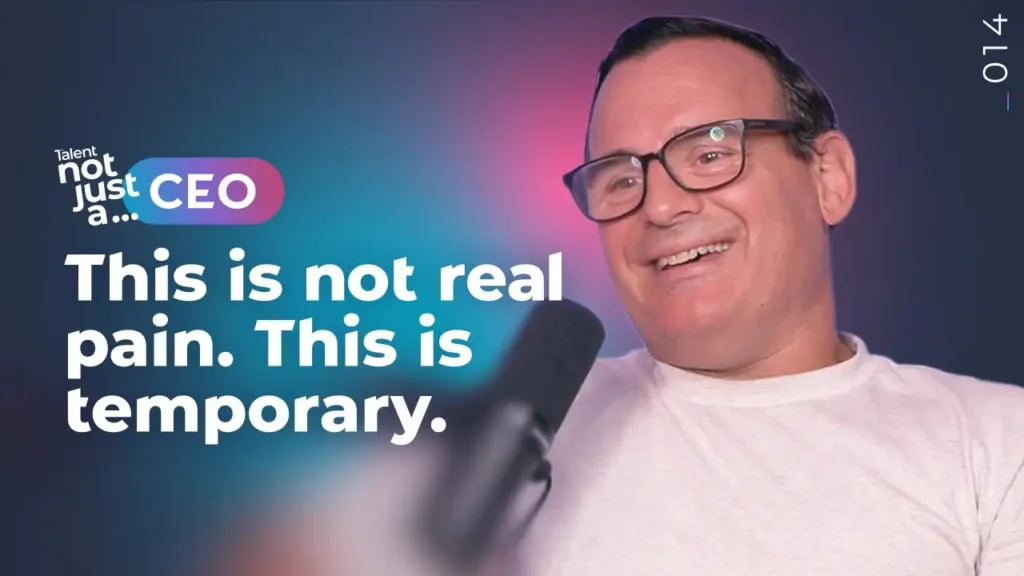
I think she’s partially right. What happened to me in childhood helps because you know what real pain is. Then you go, this is not real pain. This is just temporary.
But also, you’ve got to do a significant amount of training.
The swim I did was 56.9 kilometres in a straight line. I swam a bit more because you don’t swim straight. We started from the Isle of Man. It had been attempted seven times before, I think, but nobody had successfully completed it yet.
The reasons are: one, it’s very cold. You swim without a wetsuit. Two, there are a lot of jellyfish and a lot of people have bad side effects from it. A lot of them have been pulled out. Some of them went to hospital.
I was like, well, that sounds like the right challenge for me.
I’ve done a lot of swims since my initial Gibraltar swim. I’ve done the English Channel, I’ve swum Ireland to Scotland, Cook Strait, Catalina in LA. I’ve been doing all these 30-kilometre swims, and I thought this was a really good challenge for me to take.
I went there with a documentary team. The producer was one of the witnesses at my wedding. We went there two years ago and couldn’t get a swim. We went all to Ireland, 13 people, and couldn’t get a swim because the weather was bad, so we weren’t allowed to get on the water.
It would have been very easy for me to say, look, I tried, it didn’t happen. But I felt I had an obligation to them, to the movie crew, and to myself as well. Despite what my wife would have wanted, I decided to train for another year and go again.
We went in August last year. We started on the 11th at three in the morning and finished 27 hours later.
Amanda: Why did you start at 3am?
Victor: We were supposed to start at 12am because you get the right current to start with.
When we went over to the Isle of Man, the trip on the boat was supposed to take three hours at full throttle. But it took almost four and a half. The waves were like the perfect storm.
We got there around 7pm at night. I thought, there’s no way I’m swimming at 12 because it’s not going to come down that quick. It wasn’t swimmable. It was very dangerous.
First of all, we didn’t have a hotel. I went around, nothing was open, so I ended up sleeping on the floor of the boat. I had to sleep before I started the swim.
I went to an event before, where Michael Phelps was speaking, and I asked one question. I said, “I really struggle to sleep before big events because I’m so nervous.”
He gave me some breathing techniques to work on, and I actually used them. I slept like a baby, other than my daughter waking me up at 1am to wish me luck.
I could sleep through people coming with the lanterns and moving on the boat. I was asleep. They woke me up at 2:30 in the morning and said, “Look, the conditions have been bad. We have to leave, otherwise we won’t be able to leave.”
So we started. I usually shave before and then put the grease on. It took me half an hour. We started around three, which was more than three hours late, so we didn’t get the right current to start with.
That meant on the back end of the swim, the last six or seven hours, I was swimming against currents.
I started at three kilometres an hour and finished at one kilometre an hour. But it wasn’t that I was going slower. It was that I was swimming against the currents.
Amanda: Then you had to battle the jellyfish as well. Talk to me about that.
Victor: In Ireland, you’ve got a jellyfish called the lion’s mane jellyfish. It looks like a lion’s mane. It has that orange-yellowish colour and really long tentacles. They grow up to 40 metres long.
Usually what happens is when the water is calm, they come to the surface. When the sea is rough, they go underneath. Obviously, when you’re doing a swim, you want calmer water. So you go too big: either you get eaten alive by the jellyfish, or you swim in a whirlpool.
I picked the jellyfish.
We started at 3am. At the beginning, it was difficult with the light because the crew were adjusting the lights, and I struggled to see the boat. It took them a couple of hours. Then they put some glowsticks on the side of the boat and it was a bit better.
But it was infested with jellyfish. Infested. Especially at night, it was challenging. They are so long, you feel the tentacles but don’t see the head because they might be 20 metres away. You can only see a few metres in front of you.
I kept getting stung. I’d do 10, 20 metres — sting, sting.
The good thing is they’re not like bluebottles. A bluebottle stops you in your tracks. This is more like you get a tingle. The issue is that poison is going into your body slowly.
At the six-and-a-half-hour mark, the sun had come up. I was feeding, but I was feeling really unwell in the stomach, so I started throwing up.
I tried the next feed at seven hours and couldn’t take it.
Basically, I had 20 hours ahead of me and I could not take food.
For the next 20 hours, I just had a bit of honey.
I think when I got to the ten-hour mark, I was thinking, I don’t think I can do this. Your mind goes to very negative places in those scenarios.
Then I thought, remember the documentary about the first woman who swam the English Channel? You should probably watch it. It’s really interesting.
They used to swim it eating carrots and apples. Some of them used to drink whiskey to keep themselves warm. I thought, if these guys can do it, I can surely do it. They were old-school and they were harder, but I can do it.
I started putting my head in the right space.
When I got to the 15-hour mark, I probably hit what in a marathon is called the wall, where I thought, I cannot do it. I’m still so far away.
But the crew really helped me in that crucial moment. Then I switched off the brain, which sometimes happens when you get so tired. It’s not that difficult.
I went through severe hallucinations in the middle, but I knew they were coming, so I wasn’t quite scared. I got cold on the second night. I was shivering a little bit through one of my feeds, I remember. But when the sun came up, I was okay again.
It was hard. But it was what I needed to prove to myself. I didn’t do it to get a Guinness World Record. I did it because I needed to prove to myself that I could do something I didn’t think was possible.
Amanda: It’s incredible that you’ve done that. I have two questions off the back of that. How do you eat your food when swimming? Because you eat and still swim, right? Or do you stop swimming but stay in the water?
Victor: You’re not allowed to touch the boat. If you touch the boat, you get disqualified.
What they do is throw you a food bottle in a container with liquid food. Imagine they give you a bottle with water. It comes with a rope. You drink it. If the rope gets too tight, they let the rope go because otherwise you’re pulling from the rope and you get disqualified. Then they’ll come back and get the rope if they need to.
Usually, especially in cold water, you’ve got maximum 10 seconds. You scull through it and keep going. If you stop too long, you get really cold. The water was 15 degrees and the temperature at night was single digits. I’m not wearing a wetsuit.
If you stop, your temperature drops really quickly. You struggle with movement. Your muscles start getting stiff. So you’ve got to do it quick. Feed and go. Feed and go.
It’s difficult because when you’re so tired, you’ve got the temptation of, let me take an extra 10 seconds. But that’s the job of the crew. Your head is not in the right place to tell you to keep going.
Amanda: What were your hallucinations? Did you have some funny ones?
Victor: I did.
It was in the middle of the second night. Usually what happens is your brain wants to go to sleep. Your body is telling your brain it’s time to sleep. When the night comes, especially after you haven’t slept for 24 hours, it’s very common for the brain to shut down to the point where you start dreaming.
The first time I stopped for one of the feeds — it might have been two or three in the second night — I saw a wall. A perfectly shaped wall. It was brown and black, very neat.
I thought, well, if there’s a wall there and I’m getting home, people would have told me. Clearly there’s no wall, so I need to ignore it.
I stopped for the next feed. I saw one wall on the left and one wall on the right. I went, okay, this is getting interesting.
I stopped for the next feed, saw the walls again, and I could not find the boat. I was like, well, it’s not feasible that there’s a wooden crate in the middle of the ocean. Where’s the boat?
Suddenly, my coach comes on top of the wooden crate and I went, okay, it’s not a wooden crate. That is the boat.
For the next one, I knew I had to look for the wooden crate, so I went with the wooden crate.
Then I was seeing a dwarf dressed as a woman walking underneath me. Obviously, I could see the walls. I could still see the crate. But I knew all of that was coming, so I was mentally prepared for it.
When the light started coming up, it all disappeared and I was back in the real world.
Amanda: When you finished the race, did you sleep for a day? What was the recovery?
Victor: I finished at 6am. We got in the boat. The first bit is they try to de-grease you, and they try to do it really fast because you get very cold when you stop.
Because of hypothermia, my hips locked. I was in acute pain. That took me half an hour until I was able to stand again. Once I did that, I was fine.
We went to a marina, which probably took five hours. When we got to the marina, we went for lunch. Then we went back to the house we rented.
I couldn’t sleep that day until probably three in the morning because your body has so much going through it. You’ve got all the endorphins. My phone was exploding with messages, and I had every friend I could think of reaching out. So I was taking time responding to them.
I probably slept three or four hours, but the night after, I slept really well.
Amanda: Then you went back to work a week later?
Victor: I think two days later I got on a plane and came back.
Usually, when I do these swims, I try not to take too much time because I also have a family. If I can, I go one to two weeks early, then I swim, and then I try to get out as soon as possible. Usually you get an open ticket.
Then I’ve got to take my family on holidays as well.
I think what people don’t realise — and hopefully it will come through in the documentary — is the effort the family has to do.
The kids have less daddy time. My wife has to do a lot of the things I’m unable to do.
On a normal week when I was training for this, I would go to a pool three to four times a week. I would do a swim on the weekend, if not multiple swims. On average, I would say eight hours a week in swimming.
That also included, on Sundays, going to the Blue Mountains because in winter I was trying to get cold water, so I’d go into the mountains to get that really cold water.
On top of that, a couple of days a week in the gym. On top of that, two to three times a week getting into the ice baths.
When you put all that together, that’s like a full-time job. Then you’ve got a full-time job that pays the bills, and then you’ve got a family.
The way I managed to cope with that was I was only doing four to five hours’ sleep. That’s how I could get everything crammed.
Amanda: It’s not like you’re going to a casual job. You are a very senior person in your company, so you put a lot of pressure on you.
Victor: Pressure for me has been something I’ve been handling since I was very young. I don’t normally feel the pressure at work.
A couple of weeks ago, I had a friend who went through a really rough patch in his personal life, and it put into perspective what’s really important in life.
Sometimes we stress about work. The reality is, work is important because it pays the bills. Work is work. There are so many things more important in life.
I finished my job with a company a month and a half ago. I’ve got two jobs already lined up to start next week. I’ve got multiple jobs out there that I could be going into, multiple levels of interviews.
We are very fortunate. We live in a place where if you don’t have a job, it’s not impossible to get the next job. You’re still going to be able to pay the bills if you’ve done things right in your life and you’re in a position like I am, where you’ve got a CV people want to hire.
One of the jobs I’m doing now is heavily AI-linked. I think the world is going to be testing our resilience very soon with AI. It’s advancing at a pace that’s a bit overwhelming. But you’ve got to be sure you’re on the right side of that equation, and that’s what I’m preparing for.
Amanda: Is that something you’re passionate about?
Victor: Everything I do, I do with AI these days.
If I go for an interview, I use AI to prep me. If I’ve got to do a presentation, I get AI to do the first cut of it.
For example, when you go for CEO or head-of positions, usually you’ve got to do a presentation. They give you a case study. I put the case study into three different agents. They give me three different presentations. I pick the one I like the most, and then I go with that. Obviously, I change it up.
But the reality is, in the near term, if you don’t use AI, you’re going to be left behind, even if you are the best at what you do. So you’ve got to get into it.
I think we’re all becoming enhanced humans, and the ones who use it best are going to succeed the most.
Amanda: I agree. I really think it’s a game changer. If you get into it early, you’ll be ahead of the curve. Is that the message you’d deliver to young people coming up?
Victor: I think young people actually get it. Young people are not the problem. The problem is people who are 40-plus.
Because you go, well, I’m a nurse, why would this change my job? The reality is AI is going to change a lot of what’s happening there. Robotics will become a lot faster than they have been today. I don’t know, in five years’ time, will there be a nurse that is a robot? I think there’s a high possibility of that.
People are imagining the future is going to go at the same pace it has gone in the last five to ten years. I think with the advancement of AI, things are going to move significantly faster than they have moved. Adaptation is going to be key.
Amanda: If you could be known for something completely different than what you’re known for now, what would it be?
Victor: I would have liked to be an international rugby player, but that’s not going to happen.
A lot of people know me from the swimming, but to me, that doesn’t define me. That’s like a side hustle.
What people don’t know is the charitable side of what I do. For example, this friend who had an issue, we raised money for him and his family.
With my last swim, I built a school and a medical centre in Ghana. To me, that is what’s important. Being able to help others when you’re in a very beneficial or privileged position like I am.
Obviously, living in Sydney, you’ve still got to pay the bills. It’s not a cheap place. I’ve got kids, private school, the whole thing. So you’ve got to look after yourself. But being able to give back is very important to me.
If I leave tomorrow and I’m not in this world, I would like people to remember what I’ve done in that space. Not just, “He can go to the swim,” or “He was CEO or head of sales.” I don’t think that defines you. It’s way more than that.
Amanda: What’s a lesson outside of work that has made you better at your job?
Victor: I think the thought I gave you earlier about my mum when I left at the airport.
I had 23 people there, all crying. I had some of my friends, 30 years old, crying like they were babies. It was a very hard day. My wife cried until the plane got to Chile, and maybe for two hours more. It was very, very hard.
But that message from my mum — “I don’t care what you become. Just be sure you’re a good person.” To me, that was very important. That marked me and who I am in my career today.
Amanda: What would be something surprising for people to learn about you?
Victor: A lot of people know the swims I’ve done. They can see my CV on LinkedIn. Some of them know my personal story, some others don’t.
But most people don’t know that, for example, I built a school in Ghana, and then built a medical centre. I think that is surprising to people at times. I would like to do more of that if I go on with my next swim.
Amanda: How long did it take to build the school?
Victor: They’re still in the process of building things in Ghana. Things don’t move fast there, but we raised the money necessary to build it. They are advancing.
I raised money with three swims for that. I did the Catalina Island swim, a 35-kilometre swim. Then I did the Cook Strait. Then with the Isle of Man swim, we raised the remaining funds.
It was probably an effort of two years.
Amanda: How did you choose where you wanted to put that money?
Victor: There’s a friend of mine. He’s a director of emergency, and a principal at St Vincent’s. He meets all these unique personalities, nurses and emergency doctors.
This guy came from the UK. He was a good friend of his. He flew helicopters to rescue people. I connected with him. English guy, but he could speak perfect Spanish.
English and Argentinian people usually give each other banter. He came home for a couple of barbecues, and we used to give him a hard time about how Argentina soccer was better. He’d go back and forth, and they keep kicking our ass in the rugby.
We created a good relationship. We got to know each other really well. He told me he was doing this charity work, and I was like, I would like to help you.
As he was coming out of my house, getting into a car, I was like, I’m doing this swim. I actually should raise money for this guy.
In previous swims, I had raised money for different charities. But I realised that when you raise money, you can raise money for a cause and put it to the Cancer Council. But I wanted to build something. I wanted to raise money and have something visible out of that.
Amanda: Like a legacy you leave behind.
Victor: Yes.
Amanda: It’s very admirable that you’re doing that.
My last question for you is, Victor, what is your hidden talent?
Victor: I think I’ve got a few different talents. But as I mentioned earlier, my superpower is probably my ability to get people to work together, to deliver through others.
What happened to me in life and my professional career — both of them have shaped me to be able to do that. I can rally people. I can motivate people.
I had many leaders through my life, professional and non-professional, from my rugby coaches to the CEOs of companies where I worked. I learned from an early age what’s good leadership and what’s not good leadership.
When you’re in charge, you can have a dictatorial approach to being in charge, or you can be a person who is in charge, makes the decisions, but brings people along. For me, that has been very important.
I think that ability to deliver through others is my hidden talent.
Amanda: I love that.
Thank you so much for joining me on the couch. It’s been so wonderful chatting with you. I know our clients at Talent are going to be very lucky. They’re going to hear from you directly and get to meet you.
You’re just so fantastic. Everything you’ve achieved in life is amazing.
Victor: Well, just getting started.
Amanda: I can’t wait to see more. And people have got to watch the documentary when that comes out. Can you tell us when that’s coming out?
Victor: I don’t know, because I know they’re having conversations with a few different outlets. The guy who does the production takes care of who you sell to. I’ve done my job by doing the swim.
I think he is working on that. I’m not going to get into it because I’ll get in trouble.
Amanda: Okay, we’ll keep it a secret for now.
Thanks so much for joining us.
Victor: Thank you for your time.
Enjoyed this episode?
Explore more conversations with inspiring leaders and innovators on our podcast or subscribe to our YouTube channel for the latest episodes.
We know that talented people know talented people. If you’d like to talk to us about how we can support your business, get in touch.