
Episode 11 – Not Just a Broadcaster with Yumi Stynes
Episode 11 – Not Just a Broadcaster with Yumi Stynes
Episode transcript
Note: This transcript has been edited for clarity and readability while staying true to the spirit of the conversation.
Amanda: This is Not Just A…, the podcast where we get to know the person behind the job title. I’m your host, Amanda, and today I’m chatting with broadcaster and author Yumi Stynes. We talk about the upside of taking risks, navigating youth media and how she shows up authentically — but more importantly, we chat about who she really is outside of the job title.
Let’s get into it.
Amanda: Yumi, welcome to the show. I’m very excited to have you on. You wear many hats — broadcaster, author — and today we’re going to talk about all of that, but also the person behind those titles.
Before we get into it, tell me about who you were and what you were doing before becoming an author and radio broadcaster. Tell me about your journey.
Yumi: Before I became a TV presenter — which was the first thing I did publicly — I was a real ratbag, Amanda. A real troublemaker. I was naughty.
I finished university and felt quite lost. I had volunteered at the radio station while I was studying, but once uni ended I was completely adrift. I had a part-time job as a bartender, as a kitchen hand. I was partying too much and I didn’t really know what I was doing with my life.
Before I started working at Channel V in the year 2000, I think I was someone who used to hitchhike.
Amanda: As in physically hitchhike? Or is this an analogy?
Yumi: Yes — literally hitchhike. I’d hitchhike around because I felt like I was losing my mind not having a job. I hitchhiked from Byron Bay all the way to the far northern tip of Queensland.
I often think about myself at that time — deciding to hitchhike as far as I could go. I’d get picked up by semi-trailers and just go hundreds of kilometres.
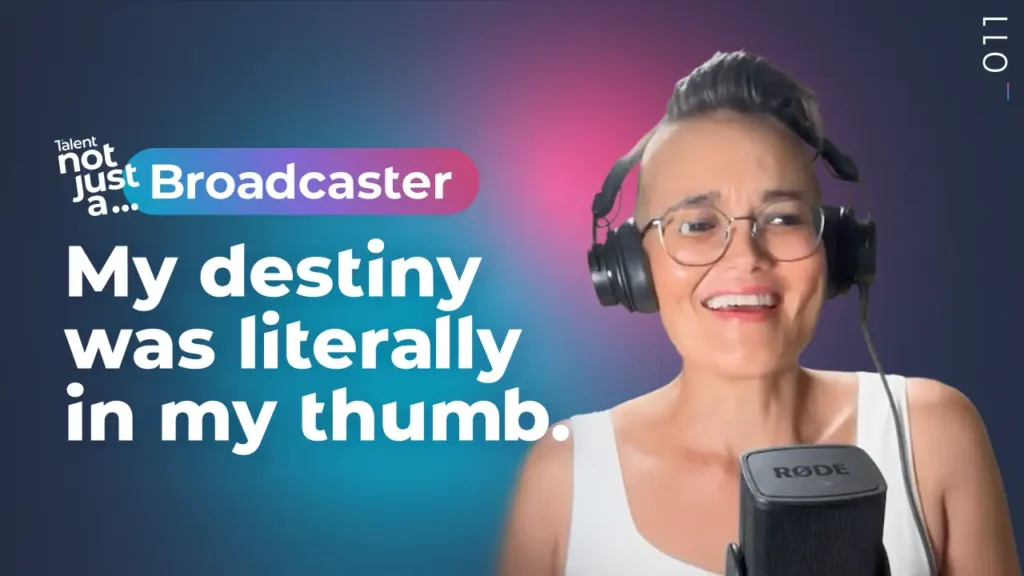
It was pretty fun, but it was also incredibly freeing. There was this feeling that my destiny was literally in my thumb. I could go somewhere completely different based on who picked me up that day.
Amanda: Were you ever scared doing that?
Yumi: Not really. I think I was a pretty good judge of character. If I ever felt uncomfortable, I’d get out of the vehicle quickly.
Most people who picked me up were kind. They’d see someone hitchhiking alone and think, “We can’t leave her there by herself.”
Amanda: You obviously have kids now. Is that something you’d encourage them to do?
Yumi: Maybe with a friend. It is a pretty amazing feeling of freedom. I think so much of your life is prescribed. Like, you’re going to go to school, you’re going to go to your formal, and you’re going to do all these things and then aim for university. You’ve got so many guardrails around you.
I just had this real sense of freedom, and I think there are moments in time when you’re pre-children and you don’t have a serious job you can take those risks. There’s not much on the line. If someone steals your backpack, it’s whatever.
Amanda: How did you score the Channel V role after that phase of hitchhiking and freedom? What was the mindset shift to then look for a proper job? It’s obviously a creative industry that you went into, have you always wanted to do something in the creative space?
Yumi: Yeah, I always wanted to do something creative, but I didn’t think I was allowed to.
There weren’t many Asian people in media at the time, so it didn’t feel like something that was available to me.
But I think there was a link between hitchhiking and going to the Channel V audition. Both required putting myself out there. It meant doing something that could feel a little bit embarrassing.
For a long time I was extremely wary of doing anything cringey or embarrassing. So, auditioning meant being humble enough to say, “I want this job badly enough to line up with hundreds of other hopefuls and try.”
At that point I thought, what have I got to lose? If I can’t give it a go now, I probably never will.
Amanda: Did you see an ad for the role?
Yumi: A friend showed it to me. I used to do a radio show at uni, and she saw an ad in a free street press newspaper and said, “You should audition for this.”
That was a big endorsement from her. I thought, okay — I’ll try.
Amanda: I actually watched you growing up on Channel V, so I’m having a bit of a fangirl moment.
Yumi: You must have been young!
Amanda: Probably around 12 or 13 when my parents finally got Foxtel. I thought it was the greatest thing ever.
Who are you when nobody’s watching?
Yumi: That’s a very personal question.
But honestly, there isn’t a huge difference. I’m the same person — just a bit more unguarded.
I’m pretty calm. I’m not much of a worrier and I’m not particularly anxious. When I’m by myself, I love having time to cook. That’s one of my favourite things.
I’ll get a couple of dishes going at once and fall into a flow state. I lose track of time and everything else fades away. It’s very calming.
But honestly, the person I am when no-one’s watching is being a parent. I consider myself a pretty good mum.
Amanda: Back to the cooking, what’s your favourite thing to cook?
Yumi: Lots of things. I’ve been working on a recipe for char kway teow, which is an Asian dish. It started in China, it’s also in Vietnam, Thailand, Burma, Cambodia and Singapore, and everyone has a slightly different version.
But I’ve wanted to cook this for about 25 years and I’ve been trying to perfect it so that it tastes like a street vendor — smokey, spicy, delicious.
Amanda: You mentioned earlier that you’re not much of a worrier. It’s something that affects so many people. Have there been moments in life when you’ve felt anxious?
Yumi: I’ve never been much of a worrier, so I do think it’s some sort of predisposition that I might have inherited from my parents. But I think part of is environmental and learning as well. So, I have worried about things like an exam or a presentation.
I used to get quite anxious before we did a big stage show. I’d be quite churned up in the tummy.
And then we’d do the show and it would pass, so I’d know there’s definitely a causation of the event, my feelings towards it and the feelings in my body.
I haven’t felt much in the way of nervousness or anxiousness about performing for a long time.
I think the secret to that is preparation.
When we started doing music TV, nobody really explained how to prepare properly, how to do a good job or how to arrive absolutely embodying the things you needed to be which was: someone who can ask a tonne of really informed questions.
A lot of what we were often doing were flying by the seat of our pants, trying to remember some Smash Hits article we read three years ago and we didn’t have the names of the band members written down in front of me. Just basic 101 stuff.
What I eventually realised, there were a couple things I needed to do: I needed to be sober, couldn’t be hungover or a little bit stoned, and I needed to do as much preparation as I could.
When you arrive fully prepared and your body is good, I don’t think there’s any need for anxiety. You just feel quite psyched and joyful to be there.
Amanda: Is that something you try to teach your children?
Yumi: Yeah, I’ve got four. Some of them are worriers and ruminators, some of them aren’t.
For people who do struggle with anxiety, I think there are some boring but powerful things that help: avoid caffeine and do exercise as a daily practice.
If you think about people who are religious, they express their faith on a daily basis and I think you need to think about your exercise with a similar reverence and respect. It needs to be factored in your life almost like medicine or a spiritual practice to become the most grounded person that you can be day-to-day.
Especially when you have young kids, it’s easy to set aside and sacrifice — but that’s when you need it the most.
Amanda: Absolutely. What’s a story from your work that captures how being fully yourself has made you successful?
Yumi: Gosh, there are so many stories. It’s a tricky one because there have been times where being fully myself has got me into trouble and gotten my shows axed or in jeopardy.
And yet, that’s the thing they want you to do — be authentic and a little bit edgy, especially in youth media. You sometimes walk a very fine line between being edgy and “Oh, I’ve crossed the line, I’m getting fired now.”
There have been times where I have been suspended from work at Channel V, which wasn’t publicly known at the time. I had to take leave and just stay home and rot while pregnant with my first child. I realised I needed job security! I was about to become a mum, this is not okay.
More recently, I had to emcee at the big Joan Sutherland Theatre in the Opera House with two days’ notice. It was for the annual Feminist Roast as part of the All About Women festival, and it felt like a great challenge.
I know how to work a big room, I know how to talk feminism really fluently, and I’m just going to be very present and react according to my truth and my spirit. I really think that was a really great example of where I nailed it.
One of the speakers told this incredibly heartbreaking story. People were crying and weeping, and I had to go, “Right, we’re going to have fun now!” but it wasn’t appropriate. So I had to think about how to do a reset, acknowledge the moment, respect that, and how to move on.
You have to show a lot of sensitivity and be a really good listener and know what to say to move on to the next phase of a big show like that.
Amanda: Absolutely, and how did you do that with the audience?
Yumi: I allowed them to all breathe and allowed them to see that I was having an emotional reaction too. I’m allowed to cry if I need to cry even if I’m the emcee. That gives them permission to cry.
Then I did a reset in the room and said, “I think I understand what we’re really doing here tonight. I want you to leave this room with your DNA re-arranged. I want you to be a different person when you get home to the person who left home this evening.”
Yeah, so I managed to do that and then wrestled the whole entire room towards a joyful finale.
Amanda: You’re obviously passionate about feminism, as am I. Is there something you’re passionate about that might surprise people?
Yumi: Lots of things. The environment, domestic violence, I don’t think that would be as surprising though.
One of the things I can visualise for my distant future is I want to work in some sort of space where I feed people who are hungry. Not fine dining, just feeding people who need to be fed.
I have such an urge in me to work out how to scale nourishment to reach as many people as I possibly could.
It’s something that’s been in the back of my mind for years. Maybe when I’m older, that’s something I’ll devote my time to.
Amanda: That would be incredible. Have you been looking into it?
Yumi: Yeah, I think it’s something that’s been in the back of my mind for my entire life. My entire life story is going to be leading to that, I hope.
Can you imagine? I’ll be 70 and so busy working trying to feed people who are hungry. That would be an amazing story and an amazing way to live your life.
Amanda: 100% and that was my next question, if you could be known for something completely different what would it be? And would it be that?
Yumi: I think so, and how about this? How about I did it and I understood the template, and I could give it to other people? So, similar people who want to do the same and give back to the world and help people who are needy: Here’s the way I did it, maybe you could do the same thing.
That would be awesome.
Amanda: Do you think there are companies out there who are doing it but maybe not necessarily nailing it? Is there an element you see in that space and feel that it really needs something?
Yumi: I’m not an expert in the field but I do feel like there are no companies doing it, it’s volunteers and charities. It’d be great if there was someone with Atlassian money or Tesla money to make it their personal ambition.
The starting point has to be caring.
Amanda: Absolutely. I think that is incredible. Maybe we’ll see you in five- or 10-years’ time. We’ll reflect and I’ll go, “Yumi told me that on the podcast a couple years ago.”
Yumi: Yeah, I’d be so proud. When I won a prize for my book Welcome to Your Period, I thought, “I can die now. I’ve done something that I’m really proud of.” And everyone will say, “She might be dead but at least she did that cool thing.”
That would be so next level if I could do something like that.
Amanda: I wanted to ask about your books as well. What inspired them?
Yumi: When I was researching for Welcome to Your Period, I wanted to include the voices of young people as well as women my age to describe the first time they got their period.
One friend told me about leaking in bed and getting it on the sheets and mattress. And I realised I have never had this conversation with my friends. I’ve never confessed to that happening even though it’s happened to every single person who bleeds.
It became clear to me why I needed to do this book. The process took many months and when it was finally printed, there was a picture of a girl facing away and looking back at her pyjama pants and there was a blood stain on the back of her pyjamas.
Even I gasped, “Oh my God, we’re really visually representing this?” It was this thing that I thought was too shameful and now it’s actually got its own picture in our book.
What’s constantly eye-opening with those books is, in the research and writing process I always come across my own sense of what’s taboo. And I have to deal with those cultural shut-down urges and keep proceeding through.
Amanda: I think it’s so great we’re in a society now where we can talk freely about these things. There’s still a way to go and these steps are helping shape the next generation.
Yumi: I get parents, particularly mums, contacting me via Instagram saying, “I wish I had your books when I was younger, thank you. I’ve just given it to my 10- or 12-year-old.”
Amanda: What’s a lesson you’ve learned outside of work that’s made you better at your job?
Yumi: I never wanted to be the needy person, or the person who was a bit broken or was having a crisis and needed to ask for help.
In recent years, I realised that that time comes for us all where we have to ask for help from people. For me, it centred around my divorce and it was a maelstrom of confusion and emotion and a heart-wrenching time.
I wasn’t able to do things. I’d get a lawyer letter or email and I’d freeze, unable to understand or process the words. I had a group of friends who were good at analysing and would just translate it to me.
That was a time when I realised that asking for help isn’t weakness. It really strengthens the bonds that you have with your existing peer group of friends. People feel really loved and special if they can help you. So you’re giving them a gift asking for help sometimes.
Asking for help and needing for help is seasonal too. Like, I won’t always be in the middle of horrible divorce. That’ll be over and then I’ll be back on my feet and drop food off to people and be the person reading someone else’s emails and supporting them.
That was incredible because I just fell wildly in love with my friends.
And I understood that partnership and coupling thing that has been sold to me all my life was pretty much not applicable to what I needed and not what I want for my future life. I don’t need a partner.
I think the way that came into work was, I just have a lot of love for my workmates. I think every workmate is a potential friend. I think it’s a really great place to make friends and the thing I have learned is to be courageous and make the first move when building friendships at work, home, or at the gym. I just really enjoy people.
Amanda: Final question — what’s your hidden talent?
Yumi: I’ve given this some thought. I’ve got a lot of hidden talents. Cooking is definitely one but it’s not so hidden. It’s not such a secret, I’m a great cook.
I have a great sense of smell. So, if you and I were near each other, I could tell if you had tooth decay, a skin infection, hadn’t showered, or if your bra was a bit overused and you needed to give it a hand wash.
I’d be able to tell you that but I probably wouldn’t. Again, not a big deal but it does inform my ability to be a good cook because I can get a lot of feedback from ingredients and stuff.
I think the hidden talent that I have is when people say they want to be a podcaster, TV presenter, author, or a broadcaster, what they need to know and share is: I’m a really good listener.
You can be a great talker, have the gift of the gab, but firstly, you need to be a really good listener. And that’s the foundation of everything — podcaster, author, friend.
Amanda: Yumi, thank you so much for joining us on the podcast. It’s been amazing speaking with you. As someone who grew up watching you on Channel V, this has been a surreal moment.
Thank you for sharing so openly about your life beyond the author and broadcaster titles.
Yumi: Thanks for having me. I really appreciate it.
Enjoyed this episode?
Explore more conversations with inspiring leaders and innovators on our podcast or subscribe to our YouTube channel for the latest episodes.
We know that talented people know talented people. If you’d like to talk to us about how we can support your business, get in touch.